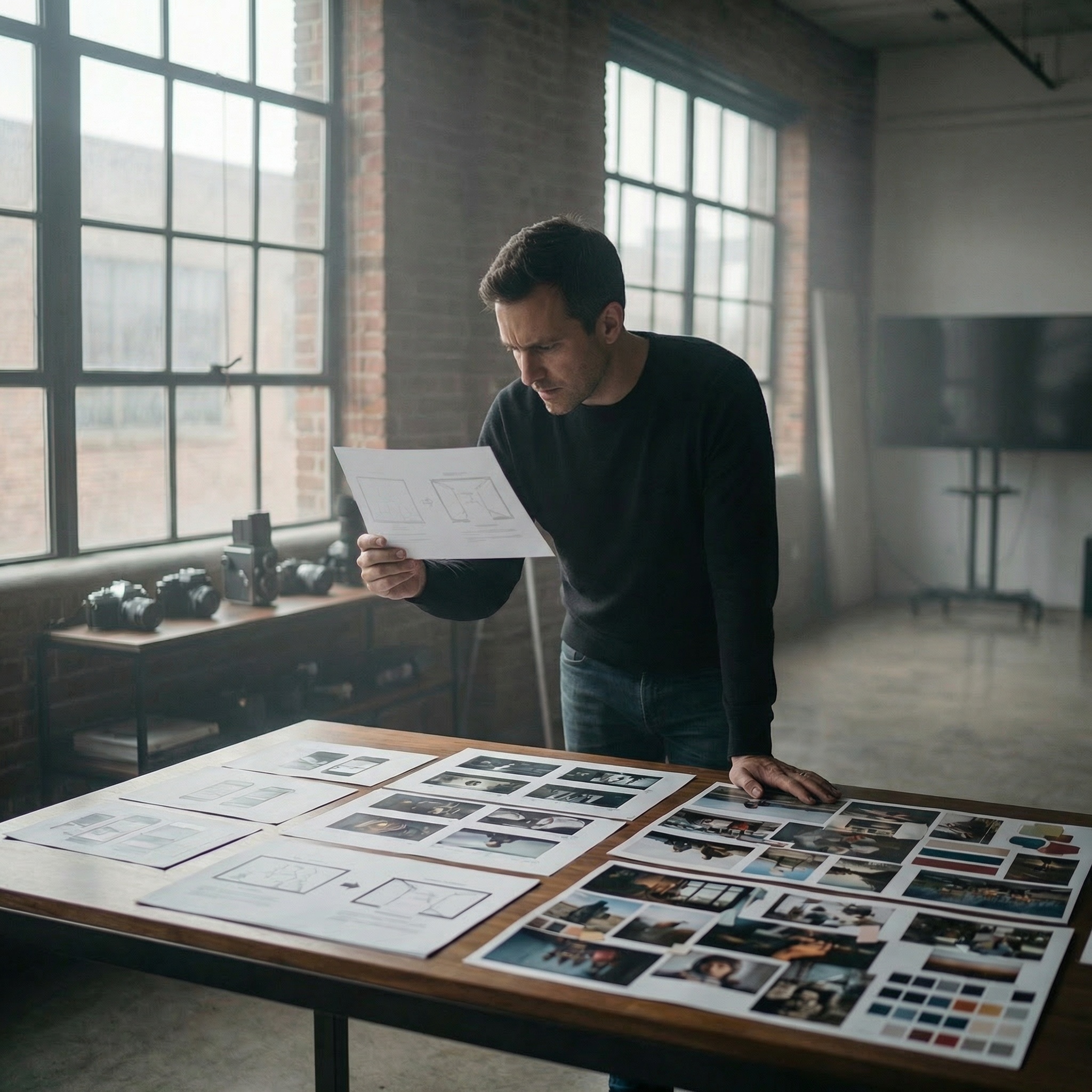
"What is this video actually supposed to accomplish?"
Not “we need a brand video.”
Not “we’re launching a product and need a video.”
But:
That discovery phase is often uncomfortable. It leads to more questions than answers at first.
But that’s where strategy begins.
If we don’t understand:
Then we’re not producing strategically. We’re producing aesthetically. And aesthetic without intention rarely performs.
Good pre-production means asking the questions that teams sometimes haven’t fully unpacked yet:
The goal isn’t to complicate things. The goal is to remove ambiguity before money is on the line.
Messaging shifts mid-edit.
Stakeholders reinterpret the goal.
The tone no longer fits the platform.
The budget can’t support the creative vision.
Those aren’t production failures. They’re strategic gaps. And strategy is built before production begins.
The point isn’t to eliminate every obstacle. It’s to anticipate the obvious ones before they become expensive.
That tension isn’t a problem. It’s part of the process.
But when strategy is clear, compromise becomes intelligent — not reactive.
If we know:
Then creative decisions become focused. We don’t fight for everything. We fight for what matters.
That alignment saves time, protects budget, and keeps execution sharp.
One of the biggest missed opportunities in video is treating the hero asset as the finish line. In reality, the hero is the foundation.
Good pre-production asks:
When those questions are answered early, one shoot becomes a content ecosystem.
When discovery is thorough and strategy is clear:
Over time, this builds something bigger than a single campaign.
It builds a system. And systems scale.
But pre-production is where marketing objectives become creative direction.
It’s where uncertainty becomes alignment.
It’s where potential roadblocks are identified before they’re expensive.
The camera should never be the starting point. It should be the execution of a strategy that’s already been stress-tested, aligned, and approved.
At Embark Media, pre-production isn't overhead — it's how we protect your investment before a camera rolls. If you're planning a production and want that strategy built in from day one, we'd be glad to talk through it.